
Washington DC consistently ranks among the most congested cities in the country, and anyone who has sat through a slow crawl around Dupont Circle or endured the daily grind along the Southeast Southwest Freeway knows this reputation is well earned. Layer on top of that traffic DC’s notoriously rough pavement, a combination of aging infrastructure and a genuine freeze thaw winter cycle that produces potholes across the district every year, and you get a driving environment that wears down brakes, suspension, and transmission fluid considerably faster than a less congested, better maintained city would.
Why DC’s Gridlock Is Especially Hard On Brakes And Transmission
Dense, sustained stop and go traffic generates repeated heat through frequent braking, and DC’s gridlock is not the occasional rush hour backup found in many cities, it is a near daily reality that can stretch well beyond typical commute hours given the concentration of federal government schedules, tourism traffic, and the sheer density of the district itself. This means DC brake pads face more cumulative heat exposure relative to total mileage than a driver in a less congested city would experience covering the same distance.
Special events add their own layer to this pattern, since DC regularly hosts large gatherings, motorcades, and demonstrations that can shut down or reroute traffic with little advance notice, funneling even more vehicles onto already congested alternate routes. A commute that is merely slow on an ordinary day can become considerably more stop and go heavy during one of these events, adding to the cumulative brake and transmission wear over the course of a year in ways that a typical commute elsewhere would never produce.
Transmission fluid faces a similar accelerated wear pattern, since dense stop and go traffic forces a transmission to shift between drive and a near stop repeatedly, generating more heat and mechanical cycling than steadier driving would produce. DC’s gridlock, particularly around commuter chokepoints like the 14th Street Bridge or the approaches to the Beltway, delivers this kind of demanding shifting pattern with unusual consistency throughout a typical week.
Why DC’s Pavement Adds A Separate Challenge On Top Of Traffic
The District’s mix of aging infrastructure and a real freeze thaw winter cycle produces potholes with some regularity, and DC’s streets have a well known reputation for rough pavement even outside of pothole season specifically. This uneven pavement, combined with the sheer density of DC’s street grid and the diagonal avenues that create numerous intersections and traffic circles, means suspension components face a steady diet of small impacts and uneven surfaces layered on top of the wear already caused by dense traffic.
The transitions between different paving projects and jurisdictions add their own complication, since DC’s roads pass through federal, district, and sometimes adjacent county maintenance boundaries, occasionally producing noticeable seams or grade changes where one paving standard meets another. These transition points can be just as jarring to a suspension system as an outright pothole, even though they rarely get the same attention in conversations about the district’s rough roads.
Struts and shocks absorb these repeated impacts, and over time this constant low level jarring wears these components down faster than the same mileage would on smoother, better maintained roads. A hard pothole impact can also knock alignment out of specification almost instantly, particularly when the impact affects one side of the vehicle more than the other, which is a common occurrence given how unevenly DC potholes tend to be distributed across a lane.
Signs This Combination Is Wearing Down Your Vehicle
A high pitched squealing sound from a brake wear indicator, a transmission that shifts roughly or hesitates when accelerating from a stop, or a ride that feels noticeably bouncier than it used to are all worth having checked. A vehicle that pulls to one side after hitting a significant pothole, or uneven tire wear that develops over the following weeks, often indicates an alignment issue on top of whatever general suspension wear DC’s roads have already caused. If you have experienced a starting issue alongside any of these symptoms, our guide on the top 10 reasons your car won’t start and how to get back on the road covers a range of causes worth ruling out separately.
A burning smell after a stretch of particularly heavy traffic, distinct from typical exhaust odor, often points to transmission fluid that has overheated from extended stop and go demand. Clunking noises specifically over uneven pavement, rather than a general rattle present all the time, tend to indicate suspension components reacting to DC’s rougher stretches of road rather than a more generalized mechanical issue elsewhere in the vehicle.
Why Standard Maintenance Intervals Fall Short In DC
Manufacturer recommended maintenance intervals are generally built around an assumption of moderate driving conditions, which do not fully capture the combined demands of DC’s dense traffic and rough pavement. Checking brakes every six months rather than annually, having transmission fluid inspected somewhat ahead of the standard interval, and getting a suspension and alignment check after any significant pothole impact are all reasonable adjustments for DC commuters given how much more demanding this specific driving environment is compared to the conditions most maintenance schedules assume.
This is worth keeping in mind particularly for anyone who recently relocated to DC for work and is used to thinking about car maintenance in terms of a much lighter suburban or rural commute elsewhere. A vehicle that performed reliably for years under those conditions can start showing brake, transmission, and suspension symptoms noticeably sooner once it takes on a regular diet of DC gridlock and rough pavement, even if the total mileage looks similar to what the car covered before the move.
Why A Mobile Mechanic Fits DC’s Driving Reality
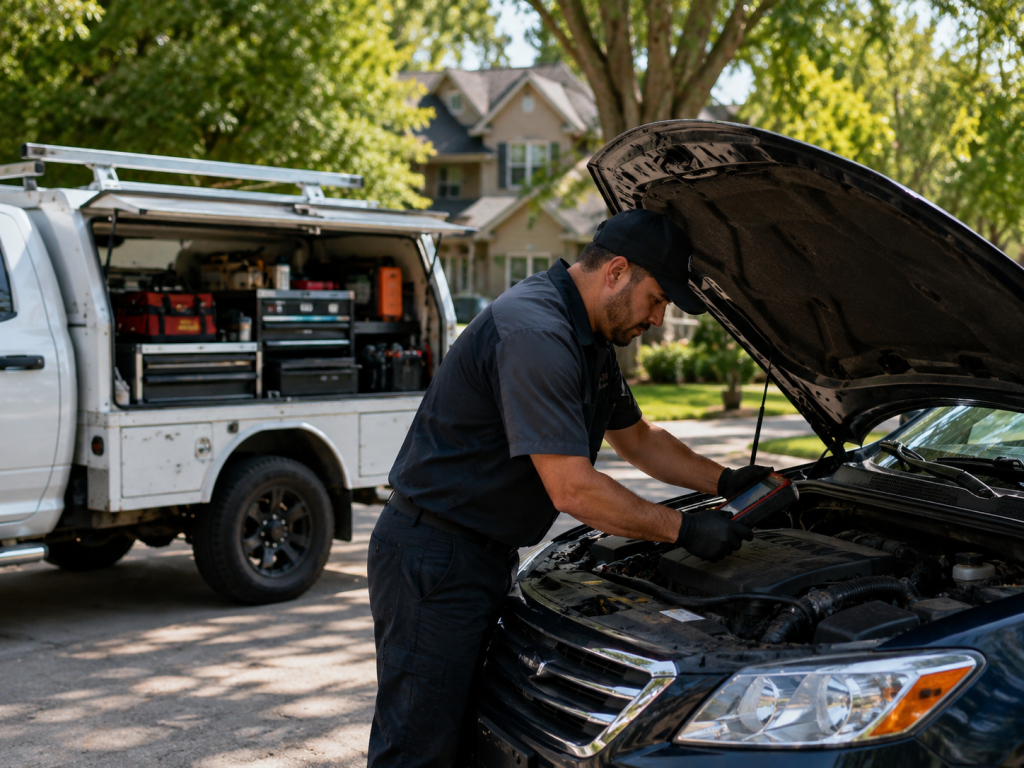
Given how much time DC commuters already lose to gridlock, adding a separate trip to a repair shop is not appealing, and finding parking near many DC neighborhoods adds its own layer of difficulty on top of that. A mobile mechanic can come to your home or workplace and check brakes, transmission fluid, and suspension components without requiring you to navigate the same congested streets that caused the extra wear in the first place.
We covered the broader advantages of this approach in our article on why mobile mechanics are better than traditional auto shops in Washington DC, which explains how convenience and flexible scheduling come together, particularly valuable for commuters trying to fit vehicle maintenance around an already demanding daily drive.
Stay Ahead Of What DC’s Commute Is Doing To Your Car
DC’s combination of persistent gridlock and rough, pothole prone pavement is not something any individual driver can fix, but staying ahead of the wear it causes on brakes, suspension, and transmission fluid is entirely within your control. Paying attention to early warning signs and adjusting your maintenance schedule to account for both factors together is one of the most effective ways to keep your car reliable despite everything a DC commute demands, whether that commute involves the Beltway, the Southeast Southwest Freeway, or simply navigating the district’s dense street grid every day.
If it has been a while since your vehicle had a thorough inspection, visit our homepage to learn more about our services, or reach out through our contact us page to schedule a visit at your home or office anywhere in the DC area.
A little proactive attention now can help your car absorb everything DC’s gridlock and potholes throw at it every single day.